


How to Use Independent Study for Travel: A State-by-State Guide

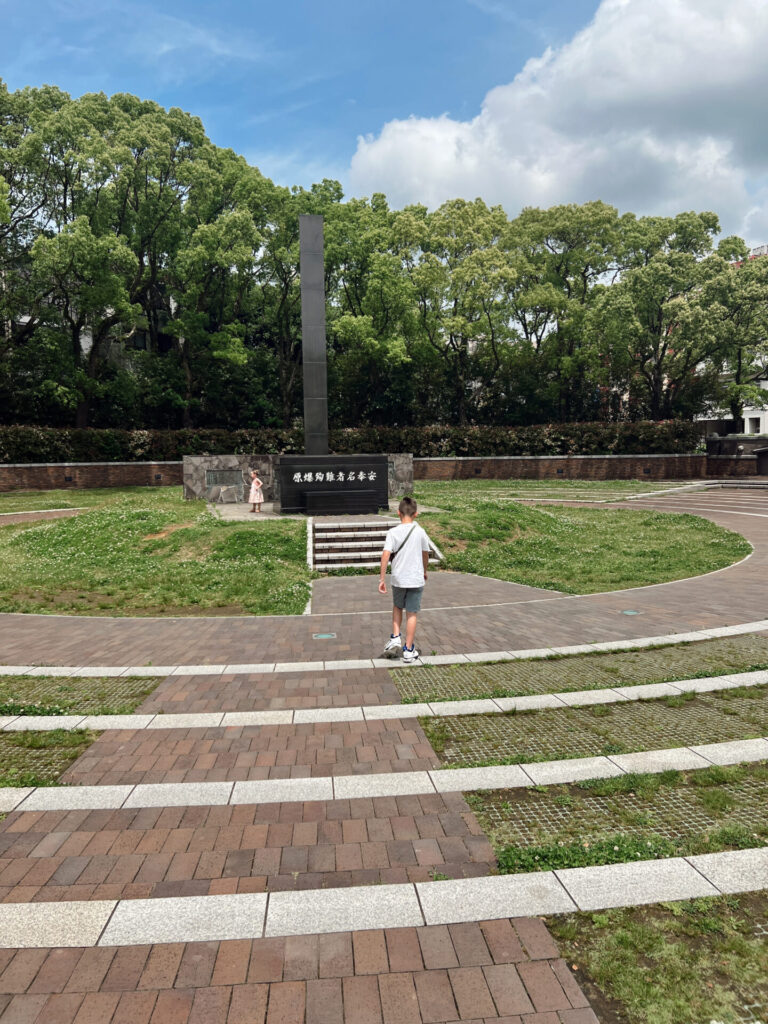
If you have followed along with our family for any length of time, you know we miss a lot of school for travel, but before you write me off, hear me out. I'm a former public school teacher (4 years in secondary education), and then I spent the last 8 years of my career as an Art History professor in higher education. I really value school, BUT I also really value the world as a classroom. We have taken our kids out of school for trips to Japan, Italy, South Africa, Greece, and more. Instead of racking up tons of absences for our kids or getting into trouble with our district, we often use a short-term independent study contract, and it has made ALL the difference.
Here is the thing nobody tells you when you start planning a trip that overlaps with the school calendar: there is often a legal, school-approved way to make it work. It does not apply in every state, and even within states the rules vary wildly by school district (that's where we come in... to make it easier on you!). But if you know what to ask for and how to ask for it, you have a real shot at keeping your child's absences excused and their education on track while your family travels.
Independent study contracts are a great way to turn an overseas school trip or a longer adventure in a foreign country into a fully sanctioned learning opportunity rather than a stack of unexcused absences and a fight from the school. The learning opportunities that come from real-world travel, whether that means exploring historic sites, experiencing cultural immersion firsthand, or just navigating a new city as a small group, are genuinely hard to replicate inside a classroom. And this is coming from a former public school teacher and then college professor; I truly believe that traveling is some of the best learning my children can do.
This guide covers everything: what an independent study contract actually is, how to request one, the timeline that has worked best for our family, and then a full state-by-state breakdown so you can look up exactly where you stand depending on where you live.
Getting ready to plan an epic family trip? Use our free Itinerary Builder here!
We're not rich, but we travel like we are. Points & miles are exactly how we travel as much as we do and keep it affordable. If you want to get started with points but feel lost, grab our free Points & Miles Crash Course here!
What Is a Short-Term Independent Study Contract?
A short-term independent study contract (also called an ISC) is a formal written agreement between the school district, the student's legal guardians, and the school that allows a child to complete their schoolwork outside the classroom for a limited time period. When the contract is properly executed and the work is submitted on time, the absence is excused rather than unexcused and doesn't count against the student.
The contract spells out which subjects need to be covered, what assignments the student is responsible for, how and when the work gets turned in, and who is supervising it all on the school's end. The required documentation typically includes the dates of absence, a description of the work the student will complete in place of classroom instruction, the method of evaluation, and signatures from all parties. A designated school official, usually a certificated teacher, is responsible for overseeing the student's participation and ultimately grading the returned work. Everyone signs before the trip starts. The student does the work during the trip. The work comes back on a pre-agreed time, and that's that.
Short-term and long-term independent study are two completely different things. A short-term ISC is for brief, defined absences, typically 3 to 15 school days, depending on the state. A long-term ISC is a full alternative instructional program that can span an entire school year. This post is entirely about short-term contracts, which is what most families need. If your child attends a U.S. school and you are planning independent travel during the school year, this is the framework to keep in mind.
Why Schools Are Often Willing to Say Yes
Most parents do not realize this, but when a child is absent without an excused status, school districts can lose funding. In most states, public school budgets are tied to Average Daily Attendance (ADA), meaning every unexcused absence is money the school does not collect.
An independent study contract solves this. When the contract is properly executed and the work comes back on time, the district can often still count those days for attendance funding purposes even though your child is standing in the Colosseum instead of sitting at a desk. That is a big reason why a lot of school officials are actually willing to work with families on this. It benefits them too.
This is also worth gently mentioning if a principal seems hesitant. You are not asking for a favor. You are offering a structure that also protects the school's funding and instruction.
The Step-by-Step Guide to Requesting an Independent Study Contract
Every school district does this a little differently, but this is the process and timeline that has consistently worked best for our family.
8+ Weeks Before Your Trip: Do Your Research
The first step is doing your homework before you contact anyone at the school. Look up your specific district's policy on independent study. Search "[Your School District Name] independent study contract" or "[Your School District Name] attendance policy." Some districts post the form right on their website along with general guidelines for how to apply. Others have restrictions on when ISCs can be requested, and knowing this before you pick up the phone saves everyone time.
Gather the necessary information at this stage by checking for:
- Does your district offer short-term ISCs at all?
- Are there blackout periods (first or last weeks of school, state testing windows)?
- What are the legal requirements around notice and signatures?
- What is the minimum notice requirement?
- Is there a maximum number of days allowed per school year?
If your district does not have anything posted publicly, that is your cue to call the district office directly and ask. Often, districts that don't have anything published online or a formal policy are willing to put a plan in place for you to build out.
4 to 6 Weeks Before: Contact the District or School Office
Reach out to the district and ask if they have a short-term independent study program. If they do, they'll tell you exactly what to do. If not, they will probably direct you to reach out to the school specifically. This is when I recommend making a call to your child's school's front office or attendance office, not just the teacher, and ask specifically whether short-term independent study is available for your child's grade level. Ask what the minimum lead time is. Many districts require 5 to 10 school days of advance notice. Some require more. Getting this information in writing, even just a quick email confirmation, protects you.
This is also a good time to confirm that your travel dates do not fall during any blackout periods. The most common ones are the first 10 school days of the year, the last 10 school days, and any state testing windows. If your dates fall within one of those periods, you will likely be told that your student might need to take a few absences.
3 to 4 Weeks Before: Submit a Written Request to the Principal
School officials need to approve ISCs, and the principal is typically the decision-maker. Write a brief, professional email or note requesting a short-term independent study contract. Keep it simple. Include your travel dates, your proposed destination, a clear explanation of why the trip is meaningful, and a note that your child is in good academic standing. If you are submitting an out-of-state travel request or planning a trip abroad, mention that briefly too. You do not need to over-explain or justify yourself.
Frame it around your child's learning where you honestly can. Mentioning the educational programs, historic sites, or cultural studies components of a trip genuinely helps. A trip to Rome has obvious educational value. A beach vacation less so, though plenty of families travel for both kinds of trips and still get ISCs approved. But any type of educational framework you can provide is important. If you're heading to the beach, will your children be learning how to snorkel or experiencing different geological formations? If so, include that! The framing matters more than you might think.
2 to 3 Weeks Before: Coordinate with Each Teacher
Once the principal approves the ISC, your child's teacher (or each teacher in middle and high school) will prepare the assignments for the period of absence. Make it as easy on them as possible. Approach them warmly, give them maximum lead time, and ask what format works best for them to receive the completed work. Make sure you fill out any required permission forms at this stage as well, since many districts bundle these with the ISC paperwork.
Some teachers send standard classroom assignments that mirror what they would cover each school day during the absence. Others get creative and assign travel journals, photo essays, or reports connected to where you are going. When a teacher designs assignments around the travel study trip itself, student participation goes up dramatically, and the work genuinely reflects what your child experienced. Go with whatever the teacher suggests and say thank you.
A note for high school students specifically: coordinate earlier because teachers at that level are managing more students and the academic credit stakes are higher. Some high school teachers need longer lead time to prepare meaningful assignments, especially in lab sciences or math.
Before You Leave: Sign the Contract
All parties must sign the contract before the trip starts. That means the student, the parent or legal guardian, and the supervising certificated teacher from the school. Get a copy for yourself. Keep it in your travel folder. Do not leave without a signed contract in hand.
During the Trip: Actually Do the Work
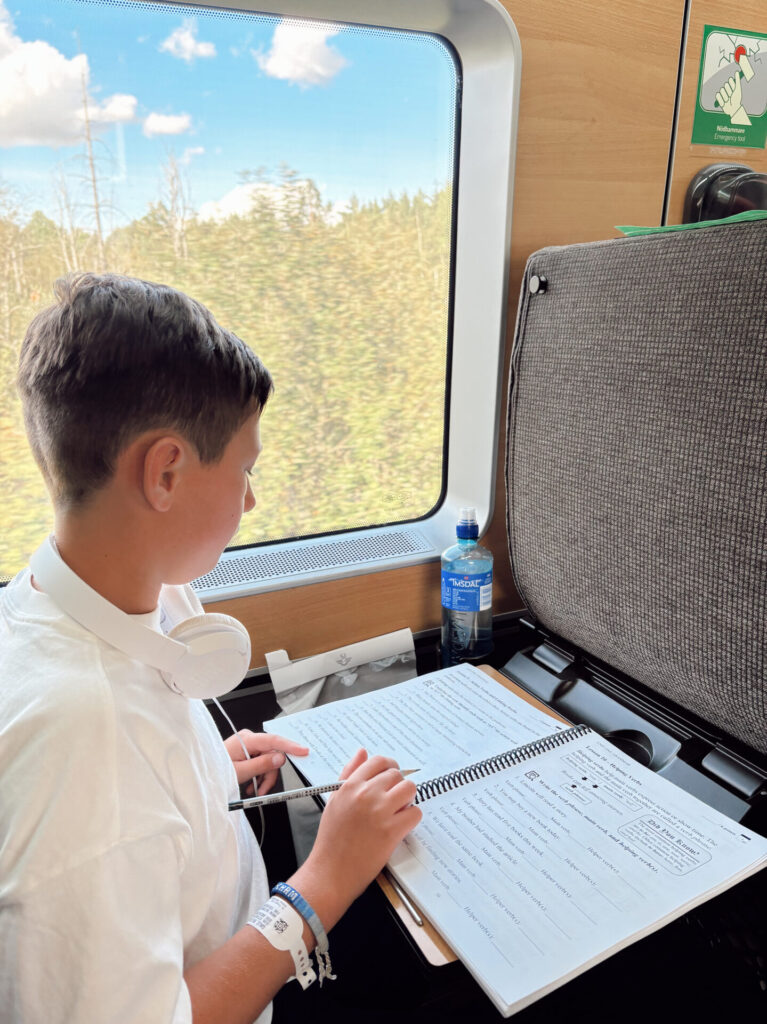
This part is non-negotiable. The whole system only works if the student completes the assigned work during the trip. We have found that working on the assignments ahead of time is the best way to go so we're not cutting into precious trip time. But there are instances where some homework during the trip is unavoidable. In this case, I like to block out 45 minutes a day. I've found this is usually more than enough for most elementary and middle school assignments.
Keep everything organized. A simple folder by subject works perfectly. Some of our kids have gotten into it more than others, but the habit of sitting down each morning to write, read, or work through math before we head out has honestly become part of the rhythm of longer school-year travel for us.
If your child's school uses an online learning platform, check whether assignments are accessible remotely before you leave. Many teachers can post work through Google Classroom or a similar system, which makes the whole process smoother. Just confirm wifi access at your accommodations if that is how assignments are being delivered.
A genuine bonus here: some of the richest conversations we have had with our kids about cultural differences, local history, and how other people live have happened right after they sat down to write about what they observed on their travels. It is its own form of academic success that never shows up on a report card.
When You Get Home: Turn Everything In
Here is the part that trips families up. The work has to come back promptly as laid out in the contract, and most districts spell out exactly when "on time" means. In many school districts, particularly in California where the rules are the most codified, late work does not earn the attendance credit that makes the absence excused. The student can still receive academic credit for the actual assignments, but if the work is late, the attendance status typically goes back to unexcused.
This is not quite as dramatic as "the contract is voided," but it is still meaningful. The goal of the ISC from your family's perspective is to keep those absences excused. Missing the return deadline mostly defeats that purpose.
Check the specific due date in your signed contract. Some schools want work turned in on the first morning back. Others allow a few days upon return. A couple of our teachers have even accepted work a day or two early if we knew we were coming home before the contract end date, which is always a nice option.
Send a thank-you note to the teacher who prepared the packet. It is a small thing that goes a long way toward making the next request easier.
Who Can Use a Short-Term ISC?
In general, these contracts are available to any resident student enrolled in a public school. Independent study programs are primarily designed for individual students, not student groups traveling together on a school-organized trip. If your child's school has an organized group trip planned, that falls under different field trip or activity policies, not a personal ISC. Most private schools and independent study charter schools set their own attendance policies, so if your child is in a private school, contact the administration directly and ask about their specific process. The framework may look different but something similar often exists.
For high school students, the process works the same way. The stakes feel higher because of academic credit and GPA implications, but ISCs are available at the high school level too. The key is giving teachers enough lead time to prepare meaningful assignments and making sure your student is taking the work seriously.
What to Do If the School Says No
Not every principal will approve an ISC, and not every school district offers them at all. If you get a no, you still have options.
You can appeal respectfully. Come back with your child's current academic standing, a note from each teacher indicating willingness to prepare work, and a thoughtful explanation of why the trip is educationally valuable. Sometimes a more detailed case changes the answer.
You can plan strategically around the calendar. Long weekends, in-service days, teacher workdays, and school breaks can dramatically reduce the number of school days you actually need to miss. A trip timed around a Friday plus a Monday gets you four or five days of travel with only one or two school days missed.
You can also accept that the absences will be unexcused for a shorter trip and make sure you stay well under your district's truancy threshold. Know that number before you book anything.
And regardless of the outcome with the school, build the learning into the trip anyway. Bring your child a journal. Have them photograph local markets, architecture, and food. Write observations at dinner. Tie cultural studies naturally into the places you visit. Educational trips do not require a contract to be genuinely educational. Some of the best educational opportunities our kids have had happened when they were standing somewhere extraordinary, not when they were sitting at a desk reading about it.
The Bottom Line
Short-term independent study contracts are a legitimate, school-sanctioned tool for families who want to travel during the school year without their kids racking up unexcused absences. They work best when you start the conversation early, come prepared and organized, make it easy on the teachers, and get the work done and turned in on time.
The state-by-state guide below will tell you where your home state falls and what to expect from your school district. Scroll down to find your state. And if you have already done an ISC with your family, I would love to hear how it went.
State by State: Independent Study and School Travel Policies
One important note before you dive in: the United States has no federal policy on independent study contracts for travel. Education policy is set at the state level, and in many states it comes down to the individual school district. What works in one county may not work in the next one over.
Because this can be a nightmare to figure out, I have organized these by region. The majority of the country falls into the "district-dependent" category, which means the state has not created a formal system, but individual school principals have wide latitude to accommodate families who come in prepared and proactive. A good-faith conversation backed by a clear plan for your child's schoolwork goes a long way in most places.
West Coast
California is the gold standard. Short-term ISCs are fully codified in the California Education Code (sections 51744 through 51749.6), covering up to 15 school days per school year, updated in 2024 via SB 153. Districts are not required to offer them but most do. Blackout periods vary by district but commonly exclude the first and last 10 to 20 days of the school year and all state testing windows.
Oregon handles ISCs at the district level. Portland-area districts tend to be more structured. Smaller rural districts handle it more informally. Give yourself 2 to 3 weeks minimum.
Washington has no statewide ISC framework for travel. Seattle, Bellevue, and Spokane each do things differently. Most Washington districts will work with families on pre-arranged absences backed by teacher-assigned work.
Mountain West
Nevada policies vary by district. Clark County (Las Vegas) and Washoe County (Reno) have some independent study provisions. Nevada flags truancy after 5 unexcused absences, so getting written approval before your trip is essential.
Arizona leaves attendance policy entirely to individual districts. Truancy is triggered after 5 unexcused absences in a school year. Most districts accommodate pre-arranged travel with teacher-assigned work if you ask early enough.
Utah is where we live, and from personal experience most districts here will work with families. Jordan, Granite, and Alpine districts all have flexibility built into how they handle documented travel absences. There is no formal statewide ISC, but principals generally have discretion. We give at least 6 weeks to figure out our contract and how we manage it.
Colorado has no statewide ISC framework. Denver, Jefferson County, and Cherry Creek districts each set their own policies. Colorado requires districts to contact parents after 4 unexcused absences, which makes advance written approval important.
Idaho is fully district-level. Many districts in the Treasure Valley accommodate pre-arranged travel with assigned work. Give written notice early.
Montana has an important wrinkle: attendance officers are required to file a court complaint if a student remains absent after a notice has been issued. Getting formal written approval before you travel is not optional here, so make sure you do it ahead of time.
Wyoming gives principals significant individual discretion. Most districts are small enough that a direct conversation with the principal, in advance and in writing, is your most effective tool.
Southwest
New Mexico is district-level. Albuquerque and Santa Fe each manage attendance independently. For high school students, New Mexico's no-pass, no-play policies for extracurriculars are worth knowing about.
Texas has no formal statewide ISC, but state law explicitly allows absences for any cause acceptable to the teacher, principal, or superintendent, which gives individual school officials a lot of latitude. Texas removed criminal truancy penalties in 2015. Many Texas districts are more travel-friendly than you might expect if you ask early and in writing. After 3 unexcused absences, districts must file truancy prevention measures, so always get formal approval first.
Oklahoma is district-level. Oklahoma has no-pass, no-play policies for extracurriculars tied to attendance, which matters especially for high schoolers. Contact the principal directly with as much lead time as possible.
Great Plains
Kansas requires each district to define and publish what counts as an excused versus unexcused absence. That means you can look up your district's policy before you plan anything. Check the district website first.
Nebraska is fully district-level. Omaha and Lincoln have more structured processes. Smaller rural districts are often more informal and relationship-based.
South Dakota passed juvenile justice reforms in 2015 that shifted toward parent meetings and interventions rather than court involvement for truancy. Families who communicate proactively are unlikely to face escalation.
North Dakota requires notification of legal personnel including district or county attorneys for unexcused absences. Getting formal written approval before your trip is non-negotiable here.
Minnesota is district-level. Minneapolis, St. Paul, and Twin Cities suburban districts each have their own approach. Principals generally have broad discretion and pre-arranged travel with teacher-assigned work is commonly accommodated.
Iowa requires districts to define and publish their excused absence policies, which means you can look up your district's exact stance before planning. Educational travel with prior approval is often accommodated in Iowa's larger districts.
Midwest
Wisconsin is district-level. Milwaukee, Madison, and Green Bay each have their own policies. Written notice and a clear plan for assigned work are your best tools.
Illinois requires districts to publish truancy policies that define valid causes for absence. State law includes a catch-all for other situations beyond the control of the student, as determined by the Board of Education. Many districts use this to accommodate documented family travel. Chicago CPS tends to be stricter. Suburban and downstate districts vary widely.
Michigan is fully district-level. Principals have wide discretion on excused absence determination. Smaller and suburban districts are generally more accommodating than large urban ones.
Indiana passed reforms requiring early parental notification and attendance conferences, but leave-for-travel decisions remain at the school level. Indianapolis, Carmel, and Fort Wayne each do things differently.
Ohio requires schools to notify students directly about unexcused absences in addition to parents. No statewide ISC framework for travel. Columbus, Cleveland, and Cincinnati metro districts manage attendance independently.
Missouri is district-level. Kansas City and St. Louis metro districts have detailed attendance policies worth reading on their websites before you travel.
South
Arkansas is district-level. Many Arkansas districts are small and relationship-driven. A direct conversation with the principal often works better than any formal process.
Louisiana follows Bulletin 741 from the Louisiana DOE for broad attendance guidelines, but excused absence determinations for travel are made by individual school boards. Louisiana has no-pass, no-play policies for extracurriculars.
Mississippi has a relatively high notification threshold. Schools do not have to contact parents until 11 absences, which is higher than most states. Some Mississippi districts extend authorized school activity with prior approval to include family educational travel if you ask directly.
Alabama allows each school district to expand the list of excused absences beyond the state minimum. Some Alabama districts include educational travel on their approved list. Ask your district's attendance office for their written policy.
Tennessee ties attendance to academic performance and extracurricular eligibility. Nashville Metro, Shelby County, and Knox County each have formal attendance policies online. Pre-arranged travel with an academic plan is generally handled at the principal's discretion.
Kentucky is one of the more travel-friendly states in the South. State law (KRS 159.030 and 159.035) explicitly allows principals to excuse absences for an educational enhancement opportunity that has significant educational value. Frame your trip clearly and get principal sign-off first.
Georgia is one of the more restrictive states. State law classifies 10 unexcused absences as truancy, which triggers a referral to juvenile court. Georgia does not have a specific policy for extended leave for travel. Some families opt to withdraw their child for a major international trip and re-enroll upon return. Talk to your district's school counselor before making any plans.
Florida is also restrictive. Five unexcused absences in a single month, or 10 within 90 days, triggers a child study team. Family vacation is not listed among Florida's statutory excused absence categories. The Florida DOE recommends working with the school on a case-by-case basis. If you are in Florida, get any agreement in writing before you leave.
South Carolina is district-level. Richland, Greenville, and Charleston County districts each have different policies. Principals retain discretion to excuse absences. Pre-arranged travel with teacher-coordinated work is often accommodated in suburban and rural districts.
North Carolina is district-level. Wake County, Charlotte-Mecklenburg, and Durham each manage attendance independently. NC ties attendance to driving privileges for students and has no-pass, no-play policies for extracurriculars. For elementary and middle schoolers, most NC districts accommodate pre-planned travel with early communication and written work.
Mid-Atlantic
Virginia requires schools to notify students directly about unexcused absences. No statewide ISC framework for travel. Fairfax County, Virginia Beach, and Richmond City handle attendance differently. Many suburban Virginia districts are accommodating of pre-planned educational travel.
West Virginia is district-level with attendance officers empowered to follow up on absences. Many WV districts are small and community-oriented. Direct conversations with principals, in writing, are your best tool.
Maryland requires notification of legal personnel for unexcused absences, which is administratively stricter than most states. Getting formal written approval before travel is non-negotiable in Maryland. Montgomery County, Prince George's County, and Baltimore City have very different cultures around attendance.
Delaware triggers a child study team after 5 unexcused absences in a month or 10 within 90 days. Pre-approval is essential. Contact your school's attendance office 3 to 4 weeks before any planned travel.
Pennsylvania explicitly allows educational travel with prior approval as a valid excused absence category under state law. Many districts allow up to 5 approved travel days per year. Written requests to the principal must be made before the trip. After 3 unexcused absences, a Truancy Elimination Plan is required, so advance approval is your best protection.
New Jersey does not recognize family vacation as a state-level excused absence. Only individual districts can choose to include it, and many do not. Some NJ districts explicitly classify trips abroad as unexcused. Check your specific district's written policy before booking anything.
New York varies enormously by where you are. NYC Department of Education is notoriously strict and consistently treats travel as unexcused. Suburban Long Island, Westchester, and upstate districts are meaningfully more flexible. Do not assume the New York experience is the same statewide.
New England
Connecticut has a helpful built-in buffer: the first 9 absences in a school year can be excused for any reason the parent or guardian provides. The 10th and beyond trigger stricter documentation requirements. A well-timed trip under 9 cumulative days can often be excused simply with parent notification.
Rhode Island is district-level. Providence, Cranston, and Warwick each set their own rules. Rhode Island has been actively pursuing legislation around chronic absenteeism, so unexcused absences are increasingly visible at the school level.
Massachusetts allows parents to excuse absences for a broad range of reasons at district discretion. Boston Public Schools is stricter. Suburban districts like Newton, Lexington, and Needham are generally more accommodating of pre-planned educational travel.
Vermont attendance officers can refer persistently truant cases to the state's attorney. Vermont's small, community-oriented schools mean personal relationships with teachers and principals matter more than formal policies. Communicate early and openly.
New Hampshire is known for strong local control of education, which makes direct conversations with principals especially effective. No formal ISC framework, but many districts are accommodating of well-planned travel absences.
Maine attendance officers must notify parents early and can report persistent issues to the state's attorney. Initial unexcused absences trigger quick administrative responses. Get written approval before you go.
Alaska, Hawaii, and Washington D.C.
Alaska has a more flexible approach to attendance than most states, shaped by its remote schooling culture. Many Alaska students attend via correspondence or distance programs by necessity. Principals in Anchorage, Fairbanks, and Southeast Alaska communities tend to have a practical attitude toward family travel, especially for culturally significant trips.
Hawaii is unique because the entire state operates as a single school district, the Hawaii Department of Education. One policy governs all public schools statewide. The DOE updates attendance data nightly and flags students absent more than 5 percent of school days. Travel absences are handled at the school principal level.
Washington D.C. DCPS and DC's extensive charter school sector each have their own policies. Both typically treat family vacation as unexcused without formal prior approval. Contact your school's attendance coordinator well in advance.